
Kiddos and 529 Plans answer a few seemingly straightforward questions differently


Kiddos and 529 Plans answer a few seemingly straightforward questions differently
Use our Cost of College Calculator to determine the Net Price your family willl owe.
Total Cost of Attending;
– Grants and Scholarships;
= Net Price
Use our Cost of College Calculator to determine the Net Price you will owe::
Total Cost of Attending;
– Grants and Scholarships;
= Net Price
Let’s break this down in 3 parts:
A. What are the median returns?
B. Are you protected if the market goes down while your kid is in college?
C. Which investment gives you the best combination of return and risk protection?
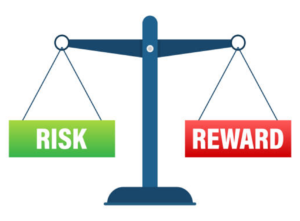
Let’s break this down in 3 parts:
A. Median Returns
B. Risk Protection: Are you protected if the market goes down while your kid is in college?
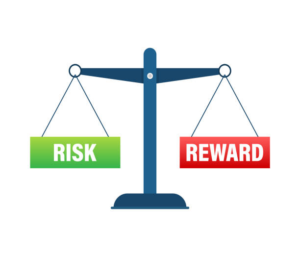
C. Balance Risk vs. Return
~11% + TLH
(TLH = 0% to 1.1%)
Kiddos Capital: Direct Index Fund with Tax Loss Harvesting (TLH)
(Long Term S&P 500 return before taxes + TLH gain)
4.7% to 5.3%
(Typical return)
529: Enrollment Date Target Fund (Return over 18 year lifecycle)
~11%
(per year)
529: Index Fund (e.g. S&P 500) (Long Term return before taxes)
| Median Return | Investment |
|---|---|
| 11% to 12.1% | Kiddos Direct Index Fund + TLH |
| 4.7% to 5.0% | 529: Enrollment Date Target Fund |
| ~11% | 529: Index (S&P 500) Fund |
| Investment Option | What is the Plan to Reduce the Risk? | Risk Management Effectiveness |
|---|---|---|
| 529 Plan: Invested in an Enrollment Date Target Fund | Reduces the risk by implementing a "glide-path" strategy that converts the investment from equities to cash/bonds as college approaches | Good Protection |
| 529 Plan: Invested in an Equity (e.g S&P 500) Index Fund | Does not implement any risk reduction strategy to protect you in the event of a market downturn | No Protection |
| Kiddos Fund: Direct Index Fund with Tax Loss Harvesting | Avoids the impact of a market downturn by borrowing rather than selling the fund to cover college | Good Protection |
| No Protection | Good Protection | |
|---|---|---|
| High Return | 529: Index Fund | Kiddos Fund |
| Low Return | 529 Enrollment Date Target Fund |
| No Protection | Good Protection | |
|---|---|---|
| High Return | 529: Index Fund | Kiddos Fund |
| Low Return | 529 Enrollment Date Target Fund |
Financial Differences: A 529 plan and a Kiddos Capital membership are two different tools that address different parts of the college funding problem. A 529 does one thing well: it lets you set aside money for qualified education expenses and grow it tax-free. That is valuable. But 529 funds are restricted to qualified education expenses; if your child’s plans change, withdrawing for other purposes triggers taxes and penalties.
| Financial Comparison | 529 Plans | Kiddos Capital |
|---|---|---|
| Education Expenses | ✓ | ✓ |
| Other Uses? | Only after paying penalties and taxes | Yes! It's your money, your call - down payment on a house, wedding, start a business, retirement |
| Will you have an asset after college? | No – designed to be fully spent during college | Kiddos is designed to invest for the long term to give you the opportunity to help build your financial future |
| Tax Free Gains | They are free of federal tax and are tax free in most states. | The gains in the Kiddos fund are taxable, typically at long term tax rates. |
| State Tax Benefits | They vary from state to state and you nay need to update your 529 when moving between states | Contributions to the Kiddos fund are made with after-tax funds |
| Tax Deferral and Tax Loss Harvesting | No | You benefit from TLH and defer long term gain taxes until you repay the loan |
First, decide whether Kiddos or a 529 Plan best helps you achieve your goals?
Second, find out how much each would cost you.
| Achieving Your Goals | 529 Plans | Kiddos Capital |
|---|---|---|
| College Funding | ✓ | ✓ |
| Grow Wealth after Graduation | ✓ | |
| Financial Advisor | ✓ | |
| College Planning | ✓ | |
| Protection if Tragedy Strikes | ✓ | |
| Negotiate Discounted Loans | ✓ | |
| Gifting Service | ✓ | |
| Duration (Graduation = 22yrs) | Graduation | Graduation + 5, 10, or to 20 yrs |
Several college savings options exist besides a 529 plan, including taxable investment accounts, Coverdell ESAs, UGMA/UTMA custodial accounts, whole life insurance policies, and membership-based college wealth programs like Kiddos Capital. Each has trade-offs related to: who controls the account, how it’s treated by the financial aid office, tax treatment, contribution limits, limits on use of the funds, investment options, and how they deal with market risks.
Kiddos Capital is one of a very small number of options that combines institutional-grade investing, built-in life insurance protection, community-negotiated college loans, gifting services, college consulting, and fiduciary-advised planning in a single membership. It’s the only one designed so your savings aren’t spent by graduation, but continue growing. For parents who want more than a college savings account — and are looking for a strategy that builds wealth while paying for college — Kiddos Capital is worth exploring.
It’s worth it if it meets all of your goals. A 529 plan is worth it for families who know how much they need, are confident their child will attend college, can save consistently at the required monthly amount, want a straightforward tax-advantaged savings account, and are willing to borrow if things change.
Where a 529 falls short is in what it doesn’t include: no built-in protection if a parent passes away, no access to member-negotiated loan rates if you haven’t saved enough, no institutional-grade investment strategies like direct indexing and tax-loss harvesting, no help applying for a college and maximizing your financial aid package, no gifting service, and no fiduciary advisor coordinating the plan as your family’s needs evolve.
Kiddos Capital is designed for families who want more than a 529 offers. to address what a 529 leaves out. Book a call with a Kiddos Advisor to help you evaluate what makes sense for your specific situation.
A 529 plan can be enough to pay for college but only if you save enough. The amount you need depends on your child’s age, the type of school they attend, financial aid, and the percentage of the rest do you want the 529 to cover. Most families fall significantly short: the average family arrives at college with roughly $28,000 saved, enough for about one year at a public university.
Kiddos Capital is designed for families who want a different outcome – one that pay for college while you keep the fund you build over decades. Members use loans at member-negotiated rates to cover tuition while their investment portfolio stays fully invested and growing — with built-in life insurance protection and access to discounted loans that a 529 simply doesn’t provide.
The monthly savings required to fully fund college through a 529 depends on your child’s age, your target school type, and how you invest the money inside the account. First, you start by calculating how much you need.
Second, you decide how you how much risk you are willing to take which determines which of two main investments you will select. The risk parents face is the market falling when the semester tuition bill comes due.
Your primary options are (A) an Enrollment Target Date Fund. This converts your investment to bonds and cash as college approaches. This reduces the risk, but you get a return of 4.7% to 5.3% over the 18 years. Option (B) is a market index fund that has no protection against a market downturn, but provides a 10% to 11% annual return.
About 70% of parents choose some variation of option A according to Vanguard research.
The longer you wait to start, the higher those numbers climb. Use the Kiddos Capital Cost of College Calculator to see how much college may cost your kiddo, then Book a Call with a Kiddos Advisor to see if Kiddos is a good fit for your family.
A 529 plan has real strengths — tax-free growth on qualified education expenses and broad availability — but it also has meaningful limitations worth understanding. Investment options are typically limited to target-date funds or a small menu of ETFs, with no access to strategies like direct indexing or tax-loss harvesting. Funds must be used for qualified education expenses, which limits flexibility if your child’s plans change. It doesn’t include life insurance protection if a parent passes away, it doesn’t help negotiate better loan rates, and it doesn’t provide fiduciary-advised planning that evolves with your family. According to Saving for College The average family arrives at college with about $28,000 saved in their 529 — enough for roughly one year at a public university. As a result the average student loan debt is ~$43,000 and parents can have as much as an additional $57,000 depending on the school. Kiddos Capital is designed to address the gaps a 529 leaves open, not replace what a 529 does well.
A 529 plan does one thing well — tax-advantaged savings for education expenses — but leaves significant gaps in investment flexibility, protection, borrowing strategy, and long-term planning that Kiddos Capital is designed to address.
The primary risk of investing in a 529 is that the market may be down just when you have to sell to pay the college bill. College bills arrive twice a year, typically with a 30–60 day payment window. We looked at the last 30 years to determine how often the market was down, when a bill was due:
Most 529 plans offer parents two choices on how to address this risk.
Choice 1: Invest in a Enrollment Target Date Fund. About 70% of family’s choose some variation of this. It reduces the risk by converting the investment into bonds and cash as college approaches. But reducing the risk in this way comes at a cost – the return is only 4% to 5% over 18 years.
Choice 2: Invest in an index fund. This has no protection against a market downturn, but returns 10% to 11% per year.
If the market takes a significant dip when your child is a freshman or sophomore, the balance can fall sharply with no time to recover before the next tuition bills arrive. Families who chose stock market exposure to reduce their monthly contribution can find themselves significantly short at exactly the wrong moment.
Kiddos capital doesn’t believe in the no-win scenario. We employ an active strategy that protects you against the market risk while maintaining higher market returns plus tax loss harvesting. Kiddos Capital’s borrowing model removes it entirely. Because tuition is covered through member-negotiated loans rather than by liquidating the portfolio, there is no forced conversion to cash at a fixed deadline. Book a call with a Kiddos Advisor to see the benefit of managing risk in this way.
Yes — a 529 plan can be used for room and board. You just pay the bill from the college that includes room and board.
A 529 plan can also be used to pay for off campus living, or living at home. But documenting those expenses is more complex and there are caps on the amount. You should speak with your accountant or tax advisor on how much you can claim and how to document it.
If your child doesn’t go to college, your options for using the money without penalty are limited. You can transfer the account to another qualifying family member, use it for eligible trade or vocational schools, or roll up to $35,000 into a Roth IRA under rules introduced in 2024, subject to annual contribution limits and a 15-year account seasoning requirement. Withdrawing for non-qualified purposes triggers income taxes plus a 10% penalty on the earnings portion.
Because a Kiddos Capital investment fund is a standard investment account, it isn’t restricted to education expenses. The balance can be directed toward whatever your family needs — a trade school, a first home, a business, or your own retirement — without penalty or restriction.
There are three key ways a 529 Plan and a membership based college savings plan differ: (1) Goals Achieved; (2) Negotiating Power; and Managing Risk vs. Return.
GOALS
A 529 plan is right if your goal is to simply save for college tax free.
A membership plan like Kiddos addresses a broader range of goals:
NEGOTIATING LEVERAGE
Just like Costco can negotiate better prices for it’s members, Kiddos negotiates better terms for it’s members to keep more of your money working for you.
MANAGING RISK VS. RETURN
Because of the way Kiddos Capital manages risk vs. reward, the cost of a Kiddos membership may be less expensive than a 529 plan.
Kiddos has developed a Kiddos Capital vs. 529 White Paper that includes a deeper comparison between the two and how they manage risk vs. return.
A 529 saves money for college. A Kiddos Capital membership builds a financial relationship around your family — combining institutional investing, member-negotiated borrowing benefits, insurance protection, and fiduciary planning in a way a 529 isn’t designed to do. And unlike a 529, your Kiddos fund isn’t locked to education expenses — it can serve whatever your family needs next.
Yes, you can hold a 529 plan and another saving plan like a Kiddos Capital fund at the same time. A common approach is to stop making new contributions to the 529 and redirect future savings into Kiddos Capital, while leaving the existing 529 balance in place to continue growing.
Book a Call with a Kiddos Advisor to help you evaluate the right approach for your specific situation, including how to coordinate 529 distributions and the Kiddos loan structure at tuition time to maximize tax efficiency and minimize total out-of-pocket costs. You don’t have to close anything to get started.
You can hold a 529 plan and a Kiddos Capital membership at the same time — a Kiddos fiduciary advisor will help you coordinate both to maximize tax efficiency and minimize the total cost of college.